Camping Hygiene: How to use biodegradable soap to wash dishes outdoors
Enjoying the outdoors only applies as long as we’re each willing to do our best to maintain these beautiful spaces for the next people who come to enjoy them. This means that you, me, and everyone else who heads outdoors needs to make an intentional effort to reduce our harm to the environment and the creatures that live there.
This brings us to the subject of biodegradable soaps. These soaps, which include popular brands like Campsuds and Dr. Bronner’s, use eco-friendly ingredients derived from a variety of plant-based oils that degrade faster in the environment compared to the synthetic ingredients found in your typical shampoos and laundry detergents.
As much as people might equate the outdoors with getting dirty—hygiene is still critically important, especially for backpackers embarking on multi-day trips into the backcountry.
Food poisoning and gastrointestinal issues arising from improper hygiene are among the most common maladies affecting people in the outdoors. Failing to properly clean your dishes or wash your hands before eating can expose you to nasty viruses and bacteria that lead to nausea, diarrhea, vomiting and cramping.
This is why soap is an essential ingredient for maintaining camping hygiene in the outdoors.
However, this does not mean that biodegradable soaps are harmless and that they can be dispersed into the environment without concern. “Biodegradable” does not mean it’s safe dump these soaps directly into the river, lake, creek or wherever. As we’ll see, there’s a right way and a wrong way to use biodegradable soaps in the backcountry.
The wrong way is to give yourself a soapy bath in the middle of the river or to wash your dishes directly in the lake.
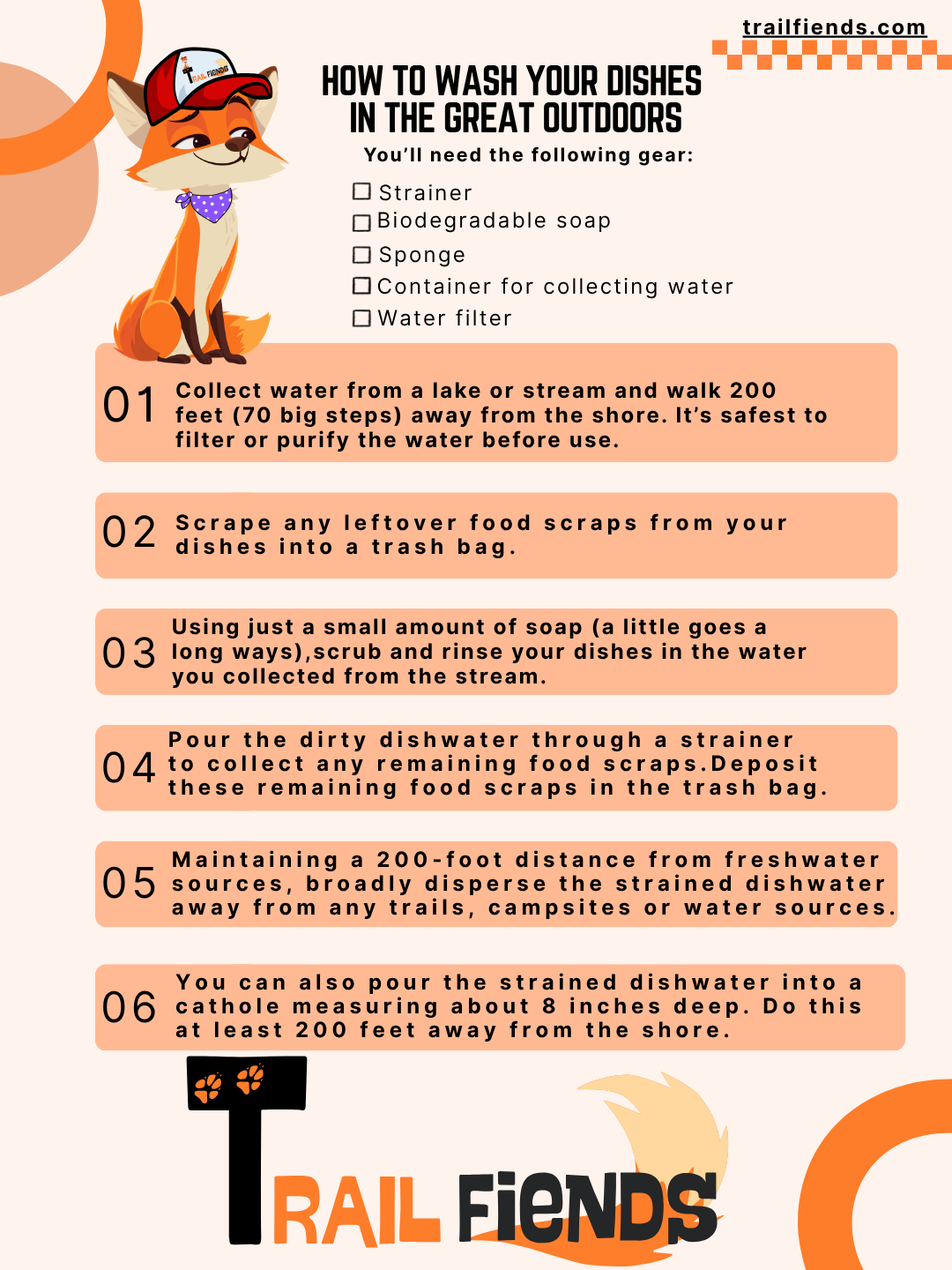
The correct and environmentally healthy way to use biodegradable soap is to always use it 200 feet (or 70 big steps) away from the shores of any water source. This 200-foot distance provides a sufficient buffer zone for the soil to trap and biodegrade the soap before it ever reaches the water. Many soil microbes consume the ingredients found in biodegradable soaps for food.
Whether you’re washing yourself or your dishes, you need to do it a safe distance away from water resources.
This brings us to the matter of why soaps, even biodegradable soaps, are harmful to fragile aquatic ecosystems found rivers, ponds, lakes and streams. Soaps contain molecules known as surfactants, which is short for surface acting agents. Surfactants boost a soap’s cleaning power by reducing surface tension, allowing the soap to mix with other surfaces so it can trap and remove dirt from whatever you’re cleaning. It’s the surfactants that help give soap its foamy, sudsy quality.
In higher concentrations, the same ingredients in soap that keep you and your dishes clean can also harm aquatic ecosystems. Surfactants are designed to clean and remove grease and the oily layers that gunk up our skin and dishes. By extension, this means that detergents found in soaps can remove the oily protective coating that protect fish from harmful bacteria and parasites.
Surfactants have also been found to damage gills, kill fish eggs, inhibit algal growth by interfering with photosynthesis, make it harder for other aquatic organisms to breathe, and cause a condition known as aerophagia, in which air becomes trapped in the esophagus, stomach and intestines—causing abdominal distress. One study found that certain concentrations of the surfactant sodium lauryl sulfate (found in Campsuds) can kill trout within hours given the right conditions.
This is why even popular biodegradable soap brands like Dr. Bronner’s and Campsuds clearly instruct people to use their soaps far away from lakes and streams. Biodegradable soaps break down faster in moist, dark soils rich with bacteria and fungi. These microorganisms are more abundant in soil than open water, and biodegradable soaps can take six months or longer to fully biodegrade in a stream. So to wrap up, here’s a quick and simple video that shows you how to properly use these soaps to wash your dishes in the great outdoors.
The video is provided by the Leave No Trace Center for Outdoor Ethics